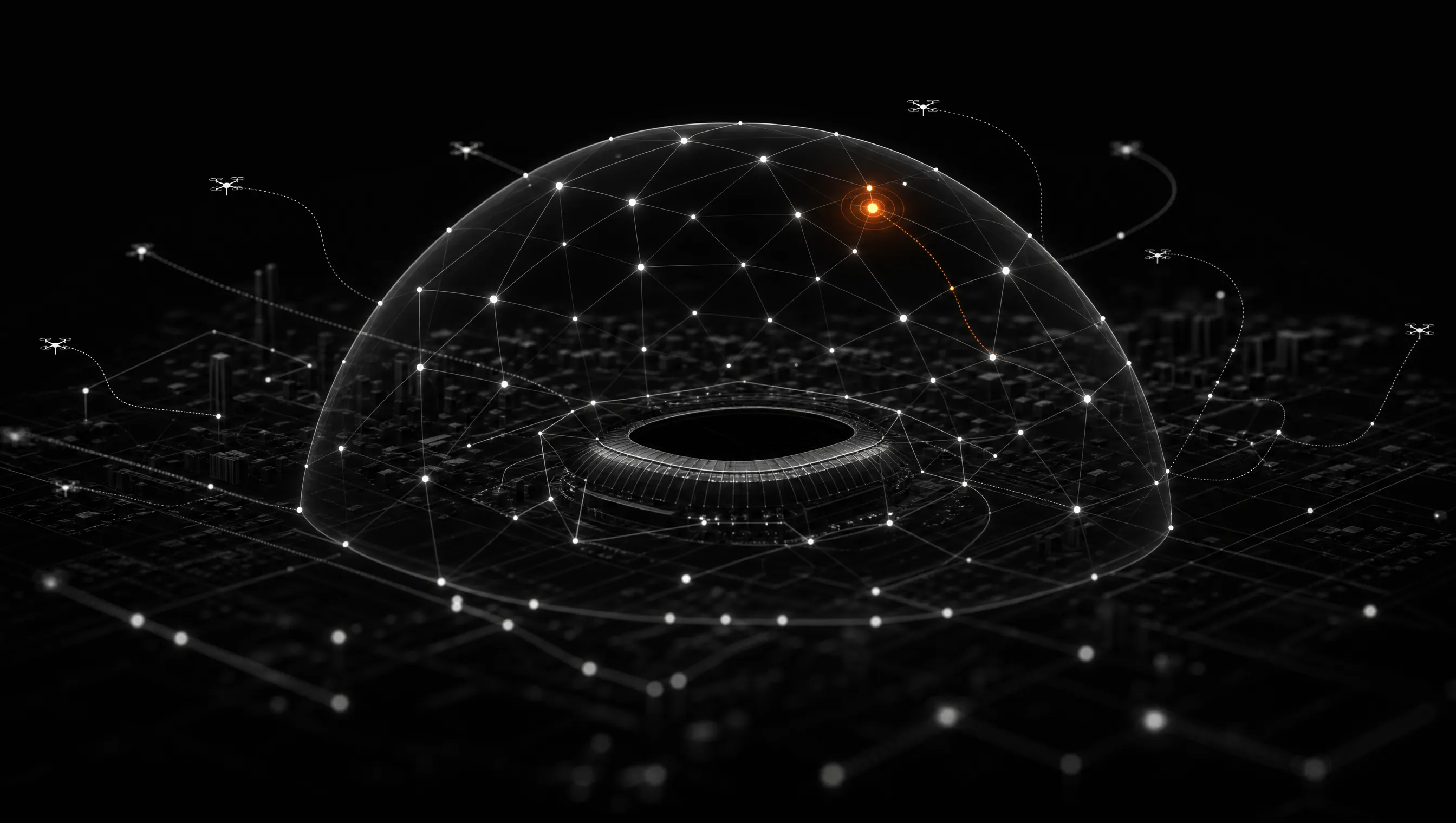

The call, up front. Unauthorized drones over stadiums and public gatherings are not a regulation problem. The no-fly zones exist. The gap is detection-and-identification: today’s geofencing (software meant to keep drones out of mapped no-fly zones) and human spotters can’t reliably separate an approved low-flying drone from a malicious one, fast enough to act. The breaches are scaling while the rule stands still.
The gap
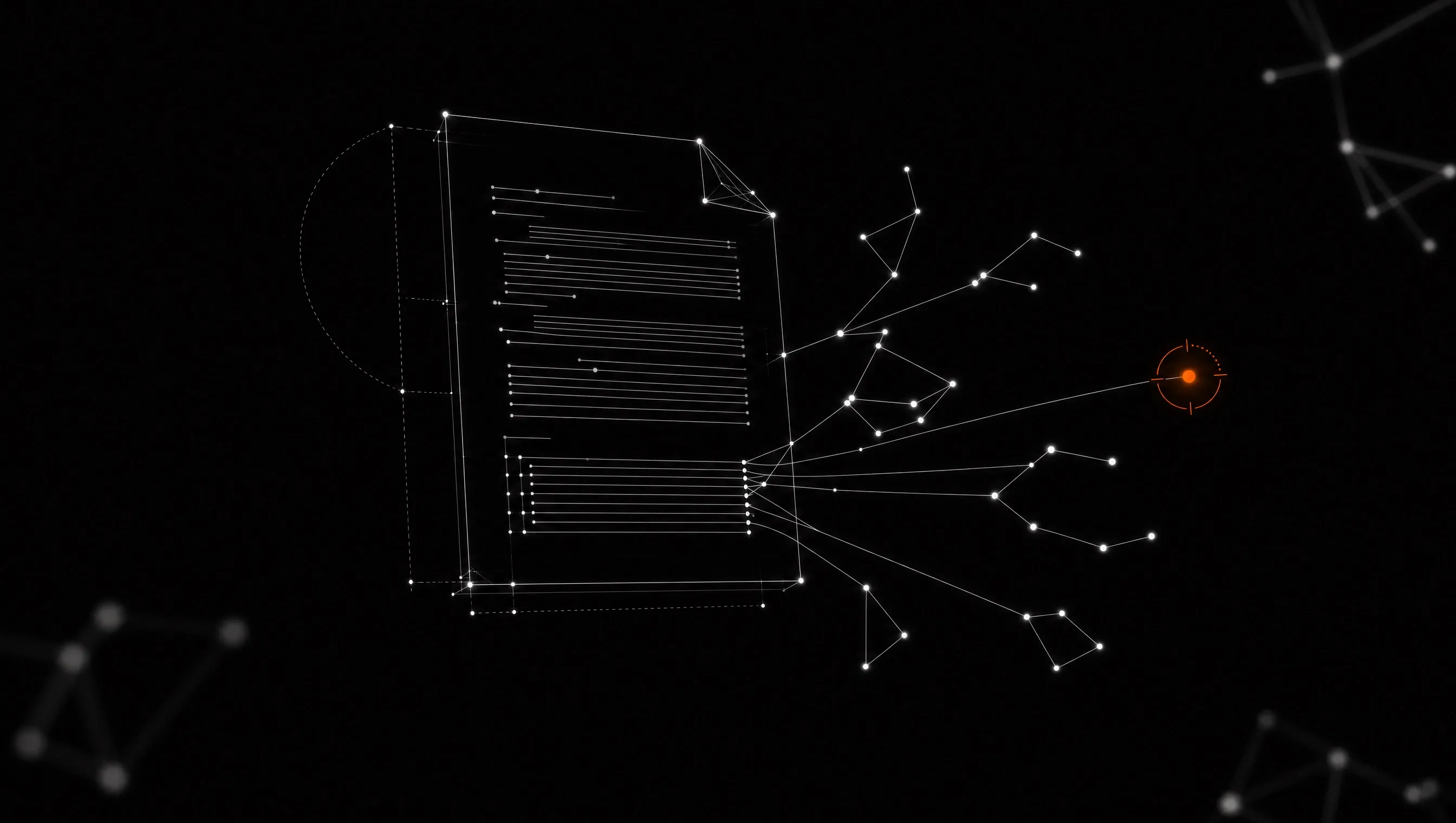
Geofencing trusts the drone to police itself. Visual spotters don’t scale to a stadium. Radio-frequency monitoring (listening for the drone’s radio signals) is rough. The real blocker is the middle link: real-time identification that tells friend from threat with low enough latency (the lag between sensing and acting) for an interception decision.
The opportunity is the detect-and-identify layer that closes inter-agency latency, not another rule, and not another geofence.
Source: Cathy Lanier (NFL Chief of Security), written testimony, U.S. House Homeland Security Committee, Dec 2024
Rogue drone flights into the temporary flight restriction (a no-fly zone set up just for the game) over NFL stadiums during games, per the NFL's Chief of Security testimony to the House Homeland Security Committee (10 Dec 2024). The 2017 figure is the testimony's 'about a dozen'; 2019–2021 are not counted separately, so the axis is by reported season, not a continuous timeline.
Source: GAPTIQ engine, challenge decomposition
- Dec 2018Gatwick shut down by drone sightings: ~1,000 flights cancelled, ~140,000 passengers disrupted
- Sep 2023FAA (US aviation regulator) Remote ID takes effect: drones must broadcast an ID, required in principle
- Jan 2024AFC Championship paused mid-game; operator located and charged with federal felonies
- Jun 2026FAA 'No Drone Zones' over 11 World Cup stadiums; Toronto charges 16+ operators within days
Source: CNBC (Gatwick); FAA; U.S. DOJ; FAA FIFA World Cup TFRs / TorontoToday, 2018–2026
The move
The buyer is the event operator and the city, not the regulator. Sell the sensing layer that makes an existing rule enforceable (detection, identification, and a single decision feed across agencies) before the next headline incursion forces it. A rule that can’t see is a rule that can’t act.
Source: Statement of Cathy L. Lanier, NFL Chief of Security, before the U.S. House Committee on Homeland Security, December 2024. Surfaced by the GAPTIQ engine.